
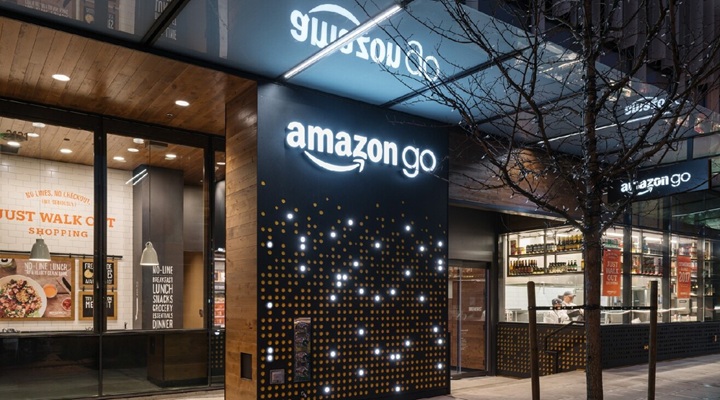
Amazon is closing all its Go and Fresh stores in the US, as the business giant pivots to its Whole Foods brand.
The company said in an announcement that it will now increase its investment in physical stores that are “resonating” with customers.
Following a careful evaluation, the retailer has made the difficult decision to close its Amazon Go and Amazon Fresh physical stores, converting various locations into Whole Foods Market stores.
“While we’ve seen encouraging signals in our Amazon-branded physical grocery stores, we haven’t yet created a truly distinctive customer experience with the right economic model needed for large-scale expansion,” the company explained.
Since its acquisition in 2017, Whole Foods Market has seen sales grow by more than 40 per cent, and the brand’s physical store portfolio has expanded to more than 550 locations.
According to Amazon, customers are increasingly choosing Whole Foods Market for both everyday shopping and special occasions, as demonstrated by record-breaking customer traffic and year-over-year comparable store growth that is outpacing the broader industry.
To accelerate this growth, the retailer is also planning to invest in opening more than 100 new Whole Foods Market stores over the next few years.
Following the closures, customers can continue to shop Amazon Fresh online in available areas for fast and convenient delivery.
According to Neil Saunders, MD of GlobalData, the decision to shutter all Fresh and Go stores brings one of Amazon’s longest-standing physical grocery experiments to a close. It also marks another retreat from in-person stores following previous pullbacks from books, fashion, and general merchandise.
The main reason behind the decision is that neither Fresh nor Go stores were delivering the sales needed to make them fully economic, nor were they producing growth trajectories that might convincingly reverse that position, Saunders said.
From a consumer perspective, grocery shopping is extremely habitual, and getting shoppers to switch where they buy requires clear and compelling differentiation, he continued, adding that neither Fresh nor Go stores offered this.
“Fresh was too similar to mainstream supermarkets. Whereas Go was differentiated around just-walk-out technology, which is not something consumers really care about. So, both chains had a very hard time disrupting the market. Some operational issues, like out-of-stocks at Fresh stores, exacerbated the problem.
“As hard as the decision inevitably was, it is ultimately the right one. Grocery is a very low-margin business where it is incredibly easy to accumulate huge losses. Amazon is prudent to step back from rolling out an expensive fleet of suboptimal stores and to divert its investments to areas where it can have more impact and generate a better return, of which there are plenty,” Saunders said.
Amazon said it will introduce a new store format, Whole Foods Market Daily Shop, which will see an increased selection of grab-and-go meals, coffee, and daily essentials.
CNN reports that some 70 Amazon Fresh stores and Amazon Go locations exist in the US. Amazon is also planning to build a 229,000 square-foot retail space in Chicago to rival major supermarkets.
Looking forward to changing trends in grocery retailing, Amazon said: “Throughout our operation of these stores, we’ve gathered valuable insights about what matters to customers. For example, our Amazon Go locations served as innovation hubs where we developed Just Walk Out technology—now a scalable checkout-free solution operating in over 360 third-party locations across five countries.
“Over the coming years, we plan to introduce new store concepts that we think customers will be excited about. Through it all, our goal remains: to make grocery shopping easier, faster, and more affordable for customers.”
Serving more than 150 million customers in the US grocery sector each year, Amazon has topped $150 billion in gross sales.