
Over the past few years, Urban Outfitters has been doubling down on immersive in-store experiences and intriguing brand partnerships to capture the elusive eye of the Gen Z shopper. Recently, it seems that its efforts are paying off. Wall Street analysts are predicting that Urban Outfitters Inc (URBN), which owns Urban Outfitters, Free People, Anthropologie, Terrain, FP Movement, Anthropologie Weddings, Menus & Venues and Nuuly, will post quarterly earnings of $1.44 per share, reflecti
cting an increase of 16.1 per cent compared to the same period last year. Revenues are forecasted to be $1.48 billion, representing a year-over-year increase of 9.2 per cent.
While part of this growth of profit can be attributed to the growing popularity of URBN’s fashion rental platform Nuuly, Christine Russo, the principal of Retail Creative and Consulting Agency (RCCA) and the host of retail podcast What Just Happened, believes the company’s namesake brand is also responsible for driving this spike in profit.
“Connecting with Gen Z has been elusive and challenging,” Russo told Inside Retail. However, she noted that Urban Outfitters seems to have cracked the code.
She explained that Urban Outfitters has figured out how to tap into the heart of Gen Z culture, which primarily focuses on authenticity and entertainment through nostalgic marketing, intriguing discovery zones, unique brand partnerships and more.
Russo recommended that brands need to keep these types of initiatives coming regularly and quickly if they want to keep up with Gen Zers.
How Urban Outfitters is vibing with Gen Z consumers
As Russo told Inside Retail, “Retailers like Urban Outfitters, Coach and others have tapped into the broader Gen Z psyche to drive dwell times in stores.”
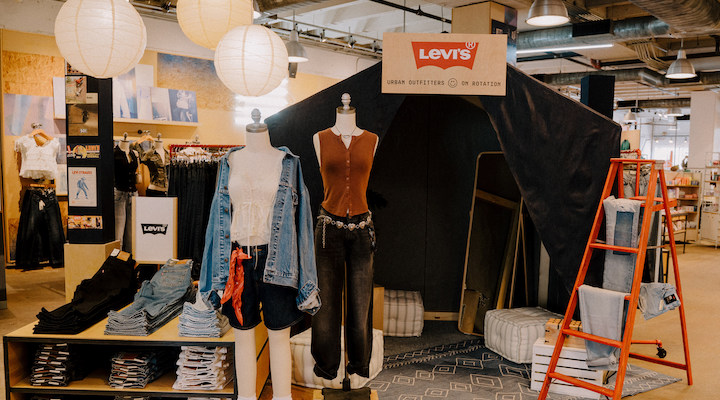
One way Urban Outfitters has extended its connection with Gen Z effectively is through the launch of a new store concept dubbed On Rotation, an immersive shopping program that transforms select store spaces into themed, shop-in-shops featuring Gen Z-favorite brands.
In a press release, Cyntia Leo, Urban Outfitters’ head of brand marketing and communications, explained that the program was designed to transform product categories into immersive narrative experiences.
“Urban Outfitters has always been a destination for discovery, especially for Gen Z, who are expressive, engaged, and intentional in how they shop and show up. Connecting with this customer requires more than just great product; it demands cultural fluency and inspiring retail moments,” Leo elaborated.
For the first iteration of On Rotation, Urban Outfitters partnered with Nike in May to open five locations across the US featuring over 150 items of curated apparel and footwear items from the legacy footwear brand for consumers to explore online and in-store.
Just three months after the successful launch of the first On Rotation partnership, Urban Outfitters announced the second iteration of the concept featuring denim legacy retailer Levi’s.
This time, the in-store concept was designed “with the energy of a vintage flea market” to showcase several of Levi’s classic styles, such as the 501 90s and 501 Curve and the Super Baggy Barrel, as well as a selected mix of vintage finds, including paper tag jeans and jackets curated by Levi’s and the Urban Outfitters’ Vintage & ReMade teams.
On August 23, Urban Outfitters and Levi’s kicked off the thirditeration of On Rotation in Austin, Texas, with an event that included Levi’s Tailor Shop customization, local vintage vendor pop-ups, live music and food from local establishments.
This not only brought in local consumers in-store and online to check out the new collection but also to immerse themselves in the world of Levi’s, creating opportunities for a positive brand association.
However, On Rotation isn’t the only strategy Urban Outfitters has up its sleeve to connect with the Gen Z shopper.
How Urban Outfitters connected to Gen Zers through Chipotle
Last week, Urban Outfitters partnered with millennial and Gen Z-favorite quick service restaurant chain Chipotle to launch a line of dorm room decor.
The ‘A Little Extra’ dorm collection includes bean bag chairs inspired by black and pinto beans, a cozy throw blanket designed to look like a foil-wrapped tortilla and a desk light shaped like Chipotle’s iconic chip bag, several of which have already sold out.
“The Chipotle partnership was equal parts unexpected and light-hearted in a way that worked really well to capture attention and sales,” CI&T’s global director of retail strategy, Melissa Minkow, told Inside Retail.
Similarly, Naomi Omamuli Emiko, founder and owner of TNGE, a marketing agency and a growth studio built to accelerate beauty and wellness brands, noted that the collaboration embeds brand fandom into daily student life, “Pairing playful merchandise with a college-exclusive loyalty program that drives ongoing engagement and social shareability.”
Both Minkow and Emiko remarked that the collab highlighted that Urban Outfitters understands what makes Gen Z tick and its ability to connect with younger shoppers in a manner that feels both playful and authentic.
Additionally, Minkow noted that Urban Outfitters has effectively grasped the power of connected retail for younger consumers through efficient omnichannel operations.
“The website and app are very easy to use as well as engaging while working in tandem with their brick-and-mortar stores. Urban Outfitters’ success really speaks to the power in firing on all cylinders,” said Minkow.
Lessons other retailers can take away from Urban Outfitters’ approach
Part of the beauty behind Urban Outfitters’ engagement with Gen Z and millennials is the ability to turn “retail into immersive cultural experiences rather than just transactions,” said Emiko.
“What’s especially smart is how Urban Outfitters blends verticals (heritage apparel with lifestyle food) and thereby expands its relevance beyond traditional retail audiences, thus amplifying buzz across social channels. Activations like these make consumers active participants in the brand story,” said Emiko.
The brand strategist pointed out that Urban Outfitters’ strategy makes it clear that culturally attuned, experiential strategies are translating into measurable business outcomes and cautioned that other players should take note of the retailer’s example before they get left behind.
“Capturing younger audiences today requires authenticity, lifestyle integration, immersive design and experiences that are both socially shareable and culturally resonant,” Emiko concluded.