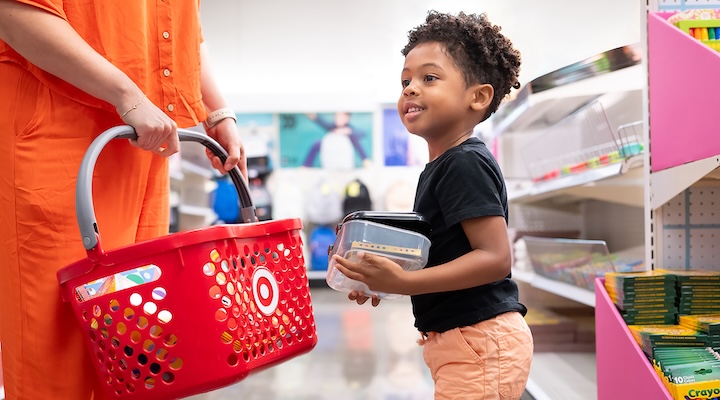
Discount department store giant Target paid a price for achieving sales growth during the all-important holiday season, its net income for the fourth quarter dropping 20.2 per cent as the company reduced its margin to maintain sales volume.
Sales rose just 1.5 per cent in the quarter to $30.9 billion, after allowing for an extra week in the prior year, with operating income $1.5 billion, down from $1.9 billion. Digital comparable sales grew 8.7 per cent during the quarter.
Results were led by strong performance in beauty, apparel, entertainment, sporting goods and toys.
For the full year, net sales decreased by 0.8 per cent to $106.6 billion from $107.4 billion last year. That reflected a 0.1 per cent increase in comparable sales, contribution from new stores and growth in non-merchandise revenue, offset by the impact of one fewer week in 2024.
The full-year operating income of $5.6 billion was down 2.5 per cent from the previous year’s $5.7 billion.
Neil Saunders, MD at GlobalData, said comp-sales growth of 1.5 per cent was below the overall market, which indicates Target is still struggling to advance in a compelling way and is losing its share of spending.
“Overall, Target is not a terrible retailer, far from it. However, it faces three main issues. Foremost among these is inconsistent execution. Target used to be a sharp operator, but over recent years, shabbiness has crept into the organization, particularly in stores. While things like out-of-stock items, aisles crowded with merchandise, and locked-up products may seem like minor factors, they all add up to a subpar experience, which pushes consumers to shop elsewhere.
“Of all the mass market retailers, Target has lost the highest number of shoppers from stores to other channels such as Amazon.”
‘A lack of newness’
He said the second issue was a relative lack of newness in stores. “Aside from in some categories like beauty, the offer generally feels stale, and this discourages visitation and impulse purchasing. The cycle of innovation and product development seems much more protracted than in the past, especially in long-established own labels which are crying out for a refresh.”
One factor that might help address this, however, was the planned trial of Warby Parker stores in selected Target stores.
The third factor Saunders cited was the brand’s “somewhat muddled position” when it comes to price and value, which has become much more important to consumers.
“This is especially so in grocery and household goods where Target is neither as competitive as rivals like Walmart nor as interesting as retailers like Trader Joe’s. The net result is a business that is neither fish nor fowl, which is a very dangerous position to be in when consumers are tuned into maximizing value for money.”
‘Better than expected’
Brian Cornell, chair and CEO of Target Corporation, said the team grew traffic and delivered better-than-expected sales and profitability during its most important quarter of the year.
“During February, we saw record performance around Valentine’s Day,” added Jim Lee, CFO. “However, our topline performance for the month was soft, as uncharacteristically cold weather across the US affected apparel sales, and declining consumer confidence impacted our discretionary assortment overall.
“Looking ahead, we expect to see a moderation in this trend as apparel sales respond to warmer weather around the country and consumers turn to Target for upcoming seasonal moments such as the Easter holiday. We will continue to monitor these trends and will remain appropriately cautious with our expectations for the year ahead.”