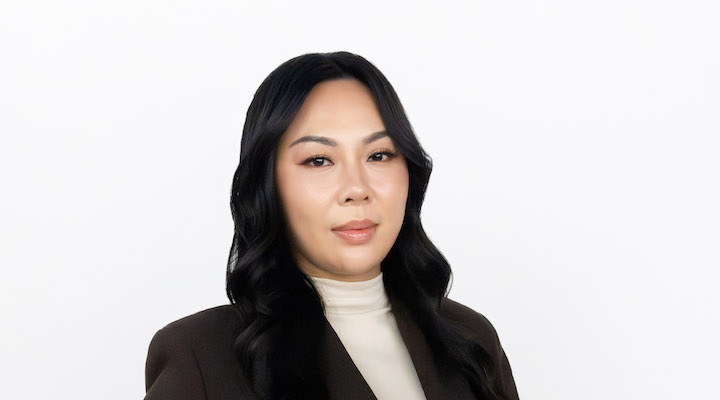
This year, local retailers such as Sephora, Ulta Beauty and Target have all been trying to tap into the secondary K-beauty wave influencing US consumers. Yet it appears that there is a new, lesser-known yet rather mighty beauty retailer making its mark in this category: Sukoshi. Sukoshi is a Canadian-born Asian beauty and lifestyle goods retailer that launched in 2018. What began with a modest 355sqft convenience store in Kensington Market in downtown Toronto, Canada, has morphed into a national
nal retail chain with 20 stores, and counting, across the US and Canada today.
Inside Retail connected with Linda Dang, Sukoshi’s CEO and co-founder, to learn more about the brand’s origin story and her thoughts on the evolving state of K-beauty in retail.
Inside Retail: Sukoshi first launched in 2018 and has steadily grown its DTC and brick-and-mortar presence over the past eight-plus years. How does the business maintain its competitive edge?
Linda Dang: Asian beauty has historically been underrepresented in North America, despite being one of the most innovative segments globally.
From the beginning, Sukoshi was built to be a specialist in that space. Our edge comes from working directly with brands that share a long-term vision with us and helping them grow in North America. We are not just stocking products; we act as a launch and acceleration platform for emerging Asian beauty brands.
We also focus heavily on education and discovery. Asian beauty is routine-driven and ingredient-focused, which requires more storytelling and in-store guidance than traditional beauty retail. Our teams are trained to help customers build routines, not just buy a single item. That creates a much more engaging shopping experience and naturally leads to stronger baskets and repeat visits.
As more global retailers begin carrying Asian beauty, it ultimately brings greater awareness to the category. Our role is to remain the destination that goes deeper, with a broader assortment, stronger brand partnerships and a highly engaged community.
IR: What have been the biggest highs and lows of running the business thus far?
LD: The highs have always been moments where you see the category gaining real traction.
Watching brands that we introduced to the North American market grow into household names is incredibly rewarding. Opening new stores and seeing customers line up because they’re excited about Asian beauty is another reminder that the space has real momentum.
The lows are often tied to the operational realities of scaling a retail business. Supply chain disruptions during the pandemic were difficult, especially when you are importing products from multiple countries across Asia.
At the same time, growing quickly means constantly building infrastructure, hiring leadership and improving systems while the business is already moving at full speed.
IR: What strategies were implemented to combat the issues that came up?
LD: A lot of it came down to building stronger direct relationships with brands and diversifying the supply chain. Instead of relying on intermediaries, we focused on working directly with brand founders and manufacturers. That allowed us to have better visibility into production timelines and inventory planning.
Internally, we also invested heavily in building the right team. Retail is operationally complex, and having leaders across merchandising, operations and brand partnerships who truly understand the category makes a big difference. As the company grew, creating better systems and clearer processes became a major focus.
IR: What have been some of your most memorable wins?
LD: One of the most memorable moments was during Covid.
Our stores had to close almost overnight, and like many retailers, we suddenly had to rethink everything. We quickly shifted our resources to focus on launching and scaling our online business, which allowed us to stay connected with customers during a really uncertain time. It was a challenging period, but it pushed us to move faster and build capabilities that ended up becoming a really important part of the business today.
IR: What does the day-to-day of your role look like?
LD: No two days really look the same. Because we’re scaling quickly, every year the business almost feels like a different company. A lot of my time goes into hiring and building the team, improving operations and working closely with different departments across the company. I’m also still very involved in buying and merchandising, the design of our stores, speaking with brand partners and scouting new locations.
I like staying close to the details and being involved across different areas of the business. A large part of my role is also thinking about where the category is heading and how Sukoshi can help shape it. That might mean identifying emerging brands, building new partnerships or continuing to improve the in-store experience.
The goal is to stay close to where consumer demand is going and make sure we are moving ahead of it.
IR: What tools or techniques do you implement to help maintain a work-life balance?
LD: Running a growing company requires a lot of energy, so I try to be intentional about how I structure my time. Delegating to a strong leadership team has been important, especially as the business scales.
I also try to protect certain blocks of time where I’m not in back-to-back meetings. That space allows me to think strategically rather than constantly reacting to day-to-day decisions.
IR: What is a piece of advice you would give to the day-one version of yourself in your brand founder journey?
LD: I would remind myself that building something meaningful takes time and that not every opportunity needs to be pursued. In the early stages, it’s easy to try to do everything at once. Focusing on what truly makes your business different and doubling down on that is what ultimately creates long-term value.
IR: What guidance would you give to aspiring retail entrepreneurs who are trying to launch their own brand or build their own business?
LD: The most important thing is to build a brand around a real point of view. Retail is extremely competitive, and simply selling products is no longer enough. You need a clear perspective on what you stand for, who your customer is and why your brand deserves to exist. From there, a lot of it comes down to momentum. When something starts to resonate with customers, you have to move quickly and keep building on that energy. If you can create an experience and a community around your brand while continuing to adapt as you grow, that’s what allows a business to stand out and keep moving forward.
IR: March marks Women’s History Month and, as you’ve disclosed to Inside Retail, Sukoshi has a majority (95 per cent) female leadership team. What does this mean for you as a brand founder and CEO?
LD: It means a lot to me. Everything I do and the way I try to build the business reflects that. A big part of it is creating space and opportunities for women who aren’t always in the room yet. That can mean mentorship, or simply sharing experiences and coaching moments that help people step into leadership roles with more confidence.
I’ve been fortunate to learn from a lot of people along the way, and I think it’s important to pass that forward. For me, it’s about building a company where more women have access to those opportunities and can grow into the leaders they’re capable of becoming.
IR: Where do you hope to see Sukoshi within the next five years?
LD: Over the next five years, we want Sukoshi to be the true category leader for Asian beauty in North America. That means continuing to expand our retail footprint, deepening our partnerships with brands and helping bring the most exciting products and innovations from Asia to this market. We’re also focused on continuing to build the ecosystem around brand acceleration, education and discovery.
Our goal is for Sukoshi to remain the destination where customers come to explore and experience the very best of Asian beauty.
Further reading: Inside Sukoshi’s plan to launch 40 stores in the US by the end of 2026