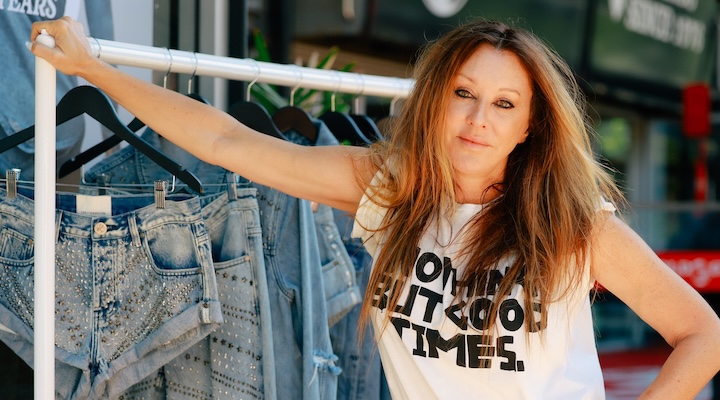
Two and a half decades after One Teaspoon first hit the shop floor, founder Liz Roberts is still running the label with the mindset of a merchant as much as a designer. What began in 1999 as a counter‑culture denim experiment has matured into a tightly controlled global business, with distribution in more than 40 countries and a playbook built around scarcity, edit and brand equity rather than chase‑every‑trend volume. The product may be distressed, but the strategy is anything but: One Te
aspoon has spent 25 years turning a very specific aesthetic into a durable commercial asset.
Crucially, Roberts has done it without outside capital, retaining full control over pricing architecture, assortment and retail partnerships at a time when many peers have traded independence for scale. That autonomy has allowed the brand to move deliberately – elevating fabrications, sharpening its wholesale mix and doubling down on icons like the Bandits and Bonitas, rather than diluting the offer to capture incremental sales. As One Teaspoon marks its 25th anniversary, Roberts speaks to Inside Retail about why editing ruthlessly beats expanding endlessly, how heritage can function as real commercial currency, and what it takes for an independent, women‑led brand to stay both desirable and defensible in a hyper‑competitive global denim market.
Inside Retail: Twenty-five years is no small feat in fashion. When you think back to 1999 and the launch of One Teaspoon, what do you remember most about those early days and what’s changed most about how you see the business today?
Liz Roberts: What strikes me most about One Teaspoon’s DNA from day one is that unapologetic attitude. The brand was born from a genuine counter-culture moment, and that was well and truly before social media. That authenticity is something you can’t manufacture.
What’s changed is the sophistication with which we express that attitude today. We’re still creating pieces for the girl who wants to look like she is super carefree, but now we’re doing it with premium denims, considered craftsmanship, and elevated fabrications. The attitude is the same; the execution is more refined.
IR: One Teaspoon has maintained a fiercely loyal customer base. How have you managed to stay both authentic to your roots and relevant across generations of denim lovers around the world?
LR: It’s about understanding that our customer isn’t buying denim – she’s buying an identity. Whether she discovered us in 2005 or 2025, she’s the same girl at heart: confident, effortless, and attitude to boot. We’ve stayed relevant by never chasing fast-fashion cycles. Instead, we’ve doubled down on what makes One Teaspoon unmistakable – those signature cuts, that lived-in luxury feel. One Teaspoon exists in culture, not seasons, worn by creatives, musicians and women who don’t ask permission. Our Bandits, our Bonitas – these aren’t seasonal styles, they’re icons that we pioneered before distressed denim was even a thing. The entire aesthetic is intentional. Destroyed denim wasn’t on anyone’s radar 25 years ago. An entire industry trend has now been spawned from this and a generation’s approach to casual style.
And frankly, we’ve been uncompromising. We haven’t diluted the brand to appeal to everyone. That loyalty comes from our customers knowing we’ll never betray the aesthetic they fell in love with. It’s not about looking stylish, it’s about feeling confident. Our cult status has real emotional pull and we are now being worn by the next generation of cool girls.
IR: You’ve built One Teaspoon completely independently – no investors, no private equity. What have been the biggest advantages and challenges of remaining self-funded and creatively in control for 25 years?
LR: The advantage is absolute creative freedom. My role is to protect the brand’s DNA and vision and I am answerable to customers, not a Board. Every decision – from our designs, to our pricing architecture to our retail strategy – serves the brand first.
The challenge? It’s slower. One Teaspoon is now stocked in over 40 countries around the world. But there are opportunities that could scale faster with outside capital. But I’ve watched too many brands lose their soul chasing growth. Independence means we grow at the pace that’s right for One Teaspoon, not right for investors. There’s power in that freedom. We’re nimble. We can take creative risks that publicly traded brands simply can’t.
IR: As one of the few independent, women-led global fashion brands, what does that independence mean to you personally, and what message do you hope your story sends to other women in business?
LR: It means I get to prove that you don’t need permission to build something extraordinary. All women should know that they don’t need backing, validation, or someone else’s money to be taken seriously. Twenty-five years says so.
My message to women in business is this: Own your vision completely. Don’t dilute it, don’t apologise for it, and don’t let anyone convince you that compromise equals growth. The brands that endure are the ones with a singular, unshakeable point of view.
Being women-led also means we understand our customer intimately – because we are her. There’s no gap between the boardroom and the girl buying our Bandits. That authenticity is our competitive advantage.
IR: After 25 years at the helm, what do you know about retail now that you wish you’d known when you started – and how is that wisdom shaping the next chapter for One Teaspoon?
LR: The biggest lesson? Edit ruthlessly. The brands that become iconic aren’t trying to be everything to everyone. They own their lane completely. That’s why our next chapter is about refinement, not following fast-fashion trends. We’re elevating materials, deepening our design language and curating our retail partnerships more carefully. Expanding our already broad reach with a focus on Asia and a broader expansion through Europe.
I also know now that heritage is currency – but only if you’re actively building on it, not just trading on nostalgia. Our 25th anniversary isn’t a victory lap; it’s validation that we’re just getting started. The girl who wants luxury with an edge has a brand that speaks her language fluently – One Teaspoon.