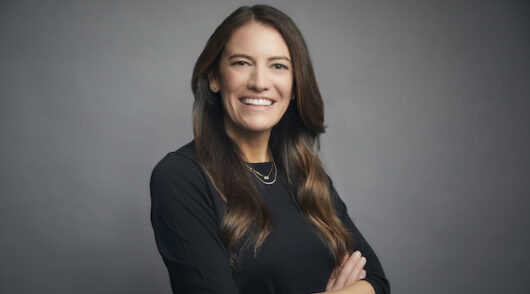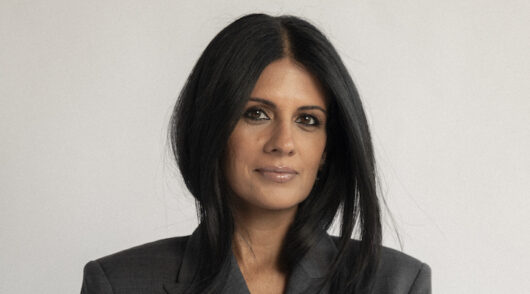
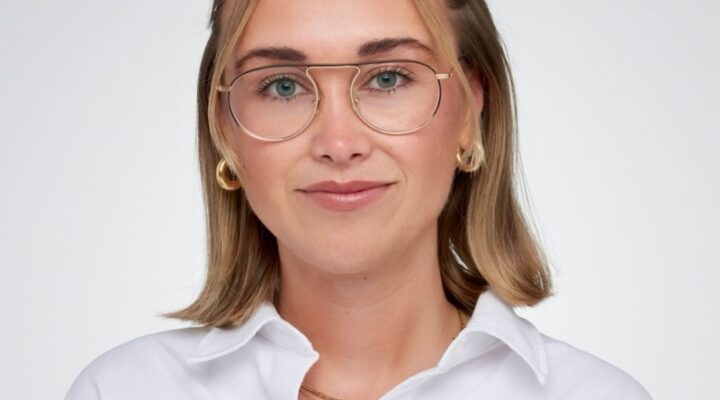
Can a $10 hand soap offer enough of the luxury experience to persuade shoppers to switch? That is the proposition behind Lenose, a brand founded by three former Bubble executives who see an opportunity among younger consumers with premium tastes but limited spending power. Caroline Valentini, Lindsay St. Clair and Zee Carlstrom aim to make their mark on this multi-billion-dollar market with affordable, upscale scents, witty brand copy and marketing geared toward Gen Z and millennials. Inside Ret
ide Retail spoke with CEO Valentini about Lenose’s origins, its distinctive name and the team’s plans to make it a leading hand wash brand.
Coming up with the concept for Lenose
Before teaming up to build Lenose, which officially launched this September, Valentini, St. Clair and Carlstrom worked in different departments at Bubble Skincare, a favorite among Gen Z and Gen Alpha consumers.
The idea grew out of a question Valentini had been asking herself: where could she find premium hand soap at a more accessible price?
“Coming from the beauty space, I was looking at the options and realizing that I could build a product that is probably 10 times as good, but sell it at the same price as what we were currently seeing on the shelf at the $10 mass price point,” she said. “I started talking with Lindsay and Zee, who were my friends long before they were my coworkers, and we ultimately decided that we could really build this product and disrupt this category. We stand behind the thesis that we could democratize luxury.”
Further category and consumer research revealed a distinct audience: early millennials through to older Gen Z consumers. Many shared Valentini’s taste for higher-quality brands such as Aesop. But a tough economy and other macroeconomic and social factors meant they couldn’t afford to indulge as much as they wanted.
“Throughout the process and in talking to one another, our friends and our family, we realized that we were actually solving a problem for an entire generation, which is when we had our ‘aha’ moment and decided, ‘Okay, let’s build this thing’… The ultimate goal here is to meet our customer where they’re at, and where they’re at is not spending $100 on soap, but spending $10. It’s really giving them a product that makes them feel excited to bring it into the home.”
That gap between premium tastes and tighter budgets is where Lenose hopes to find its place in the hand wash market. Currently, the market includes established names ranging from the more accessible Bath & Body Works to the higher-end Australian brand Aesop, with estimates that the global hand wash market is already worth $5.4 billion and could grow to $7.6 billion by 2030.
Fleshing out Lenose’s launch plan
Lenose took roughly a year to go from concept to launch. Valentini attributed that pace partly to the founders’ clear vision from the outset and their collective experience building beauty brands.
At Bubble Skincare, Valentini had been director of new product development and creative and marketing operations. Carlstrom was senior director of brand strategy and communications, while St. Clair was vice president of creative and brand.
The founders also pooled their savings to fund the brand’s initial development.
“We were very lucky that we were able to do a lot of the brand building in-house and that we had the expertise to take it as far as we could,” Valentini recalled. “Ultimately, last spring we decided to fundraise.”
Lenose closed an oversubscribed pre-revenue fundraising round of more than $3 million, with strategic backing from early Aesop investor Era, Fifth Growth Fund, Opensky Ventures and other venture groups and angel investors.
“Something very important to us in the process was choosing the right partners,” Valentini recalled. “By that, I mean finding people that would really allow us to execute our vision and open doors that we couldn’t open by ourselves.”
Beyond finding investors who supported the brand’s goals, she valued industry veterans’ help with the finer strategic details.
“One of the biggest challenges that comes with building a new business, especially a CPG one, is demand planning. It’s something that feels so uncertain, and while you may have these big goals, you need to have enough inventory to support those aspirations and be realistic with cash flow. It’s understanding the duality of the situation, to make sure you don’t overstock while avoiding selling out on day one. Getting the perspective of other people that have gone through this process from the very beginning and know how to manage it has been really critical for us.”
Lenose launched its first five hand soaps, priced at $10 each, on its DTC site this September, alongside its Tiktok Shop. An Amazon page followed this October.
Sniffing out Lenose’s fun and funky approach to copywriting
From day one, the team had a clear idea of how it wanted to connect with younger millennials and older Gen Z consumers.
That approach spans formulation and copywriting. To cater to ingredient-aware customers and those with sensitive skin, Lenose avoids parabens, phthalates, polycyclic musks, nitromusks, silicones and dyes.
Its product names show how that thinking translates into an unconventional brand world: “Don’t Call Me Boring I’m Extra Vanilla”, “Yeehaw I’m a Sandalwood Cowboy”, “Orange You Glad Life’s Not So Bad”, “Kiss Me On Coconut Coast” and “I’m So Fancy My Soap Smells Like Money”.
“With the luxury soaps, there are no words on the packaging, just a logo,” said Valentini. “Then with mass-market soaps, the packaging is covered in words. When we started working on the copy, we set out to make it as intentional as possible and to establish a legitimate feeling for when you use the product.”
The team wanted customers to enjoy both the sensory experience of using the soap and the feeling it evoked.
“For example, you can’t say, ‘Yeehaw I’m a Sandalwood Cowboy’, without smiling,” the CEO pointed out.
The website takes a similar approach. Under “How This Fragrance Will Make You Feel” on the page for “I’m So Fancy My Soap Smells Like Money”, the copy reads, “$100 soap is basically a scam invented by luxury fragrance brands to ensure normal people can never retire, so we created this limited-edition soap de parfum that smells like $100 bills to remind the world that millions of people are literally washing money down the drain when they buy soaps that cost more than $20.”
Valentini said the quirky copywriting also appeals to Gen Z and millennial shoppers seeking authenticity.
“Where LeNose really stands out with it all is that there’s a certain originality that we show up with. Right now, across other brands, we’re seeing dupe culture afoot along with AI-built brands, so there are not really any authentic new ideas. We set out to create a really original world that makes people sit back and say, ‘Whoa, they had the guts to go out there and push the boundaries on where these brands go’. Which is something that’s really important to us.”
Over the next year, Valentini wants to get Lenose’s current products into as many hands as possible.
“It’s really about getting people excited about the products we have, the world that we’re building and to really get them behind this democratization of luxury. Then five years from now, when we ask, ‘What does your home smell like?’, we want customers to say, ‘My home smells like LeNose.’”
Further reading: Inside Lush’s journey from mail-order chaos to ethical beauty institution