
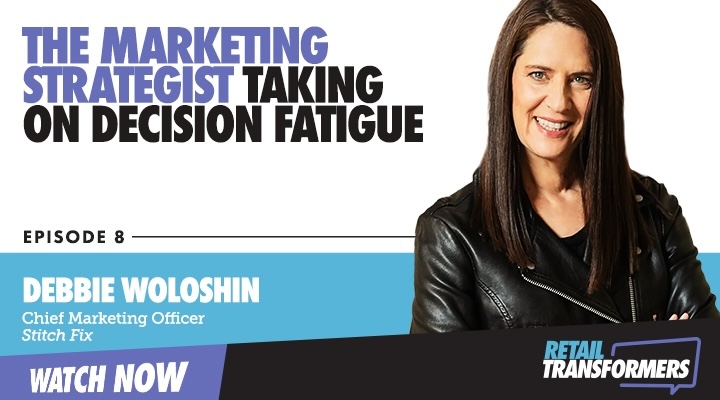
“Shopping is broken,” declares Debbie Woloshin, CMO at, Stitch Fix. “Apparel shopping does not deliver what our clients need.
Ninety per cent of clients from a Stitch Fix internal survey described their online fashion shopping experience as stressful, overwhelming and fuelling self-consciousness. “You go to the mall, you need a dress, you leave with nothing in your bag, you go home, and you’ve got 37 tabs open. By the time you check out, you bought paper towels and not the dress you needed to go to your sister’s baby shower.”
In an interview with Inside Retail’s Amie Larter for the video series Retail Transformers, Woloshin referenced the phrase ‘decision fatigue’ to sum up consumers’ misgivings about online fashion shopping.
“It’s not working in-store and people are not satisfied online. We know that decision fatigue is real and people really need the help.” That’s how Stitch Fix’s business model evolved and can now serve specific needs across lots of different audiences by bringing together data and a personalized service model.
“We’ve got more than 450 brands, and we can deliver what clients need: Convenience, style, fit and obviously the personalization associated with their own personal style.”
Since 2011, Stitch Fix has built a platform that uses recommendation algorithms and data science to personalize clothing items based on size, budget and style. Part of Stitch Fix’s solution is grounded in monitoring customer engagement and feedback.
“We are a very client-centric organization,” says Woloshin. “We listen to our clients all day long. We sit in focus groups next to them. We listen through surveys. We listen through social listening. We field a lot of community-based information, and we know a lot about what they need and want.”
This engagement and listening led to the brand creating Retail Therapy, a brand platform and marketing campaign launched in 2024 that uses humorous, empathetic storytelling across digital and broadcast media to highlight common shopping frustrations. For example, crowded stores, endless choices, bad lighting – and position Stitch Fix as the personalized, stress-free alternative. The campaign focuses on making clients ‘feel seen, understood, and confident’ through data-driven styling.
The fix: Personalisation and engagement
Woloshin, who worked for brands including Marc Jacobs and L’Oreal before joining Stitch Fix, says the key to campaigns like Retail Therapy is authenticity. Content from stylists, clients and influencers are all designed to be “incredibly engaging”. The business’ internal metrics reflect longer times online and deeper engagement than is typical in the industry.
All of the stories from Retail Therapy are based on the client insights and the stories they shared with the business. “We tried to bring empathy and levity to what is a stressful situation and to show that Stitch Fix is the solution.”
So think about the character who confesses to her retail therapist that she only wears gym clothes but does not go to a gym. Or the person in the most recent campaign spot who doesn’t know what to wear on vacation because she only wears scrubs during the day as a nurse.
“These are like very relatable stories,” shares Woloshin. “We know 49 per cent of our clients said that they’d be willing to or have canceled plans because they have nothing to wear. All of these facts coming together and the ways we see our clients struggling and what they say to their stylists brought us to this campaign concept.”
The relationship business
To Woloshin, Stitch Fix is more than a clothing retailer: “We are in the relationship business. You can’t have a relationship with AI, but you certainly can have a relationship with your stylist. And we are here to make our clients look and feel their best, to bring convenience into their life and let them be seen and let them know that this is customized and specific for them.”
Clients have different approaches to using Stitch Fix. Some ask the stylists to “do it for me”, others want “the right fit that will flatter me”. Others say they are worried about their family budget, while others are seeking an outfit to suit a special occasion.
“Tailoring the message to either the moment in their life, to the occasion or where they are in their life, their body transformation – maybe they’ve just had a baby – are similar in terms of how you customize [the message] to your audience.”
She describes Stitch Fit’s business model of service, personalization, and community as “kind of like the perfect storm” for a marketer and she thrives on it.
“It’s interesting, it’s authentic, and it’s truly a service. So coming from the experience I had where I worked in packaged goods and then with designer brands, it was a really interesting, very fun pivot.” Moving to Stitch Fix felt like an opportunity to take all she had prevuously learned and apply it to something that was special and deserved a different touch, she recalls.
“When you’re in marketing, you wake up every day to try to figure out what you can do better, what you can do differently. And when you’re part of a transformation, you get to do that on steroids. It’s very exciting. We have so much client insight in our back pocket, and we have so much information from the relationships with our stylists that we really have a lot to work with.
“So while some people might be intimidated, I find it really invigorating because we have such an opportunity to think about ways of working, how we’re communicating, and then how we’re really getting everybody in the organization motivated to be part of this transformation, which makes it even more exciting.”
- Watch the video interview to hear Woloshin talk about how Stitch Fix is boosting engagement between stylists and clients, enabling visualisation of designs, bringing clients together as part of a community and optimising personalization.